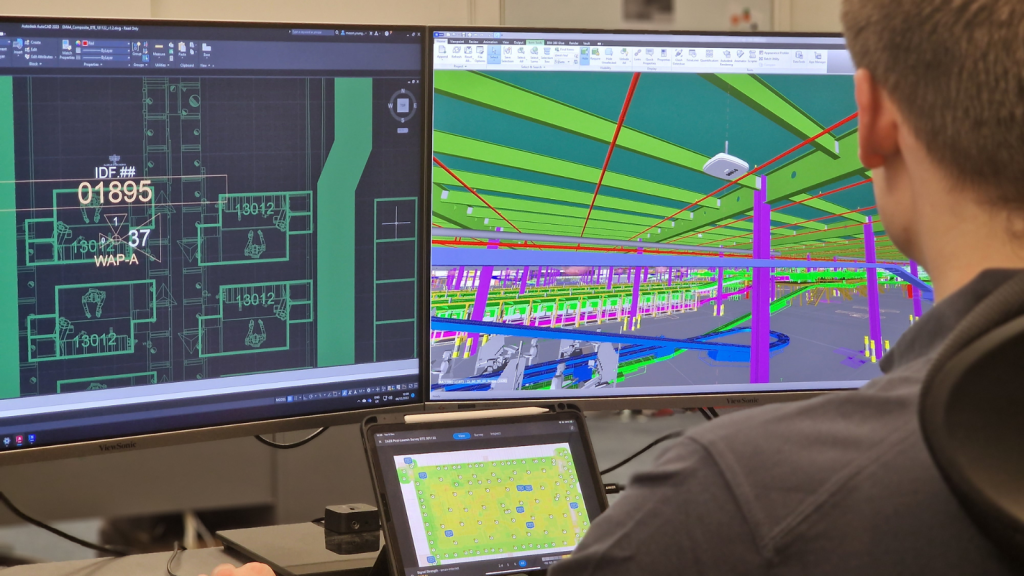
In today’s fast-paced world, warehouses are evolving rapidly. Efficient operations depend on seamless connectivity. Warehouse Wi-Fi solutions are crucial for modern facilities.
- Reliable Wi-Fi enhances productivity and streamlines processes. It supports automation and IoT devices, which are essential for modern warehouses.
- Connectivity challenges are common in large spaces. Metal racks and open areas can interfere with signals.
- Strategic planning is key to overcoming these obstacles. Proper placement of access points ensures full coverage.
- Dual-band WiFi helps manage diverse traffic types. It balances the load between 2.4 GHz and 5 GHz frequencies.
- Wi-Fi 6 technology offers improved speed and capacity. It is ideal for high-demand environments like warehouses.
- Security is a top priority for warehouse Wi-Fi networks. Protecting sensitive data is essential for business integrity.
- Regular maintenance and monitoring prevent downtime. They ensure the network remains efficient and reliable.
Why Reliable Warehouse Wi-Fi Matters
Reliable Wi-Fi significantly transforms warehouse operations. It enhances both inventory management and real-time data access. A stable network is the backbone of efficiency.
Connectivity supports mobile devices and handheld scanners. These tools are vital for accurate picking and packing tasks. Seamless communication between teams is also essential.
Moreover, Wi-Fi enables integration with warehouse management systems (WMS). This integration streamlines processes and reduces errors. Data flows smoothly, ensuring timely and informed decisions.
An effective Wi-Fi network reduces operational costs. Automation and efficiency minimise labour and manual errors. The network becomes a tool for cost-saving innovations.
Consider these benefits of reliable warehouse Wi-Fi:
- Supports IoT and automation devices
- Enhances inventory control and operational efficiency
- Reduces costs by improving processes
A well-designed Wi-Fi infrastructure fosters safety and communication. It ensures that every segment of the warehouse remains connected. Thus, investing in robust Wi-Fi solutions is essential for modern warehouses.

Key Challenges in Warehouse Wi-Fi Deployment
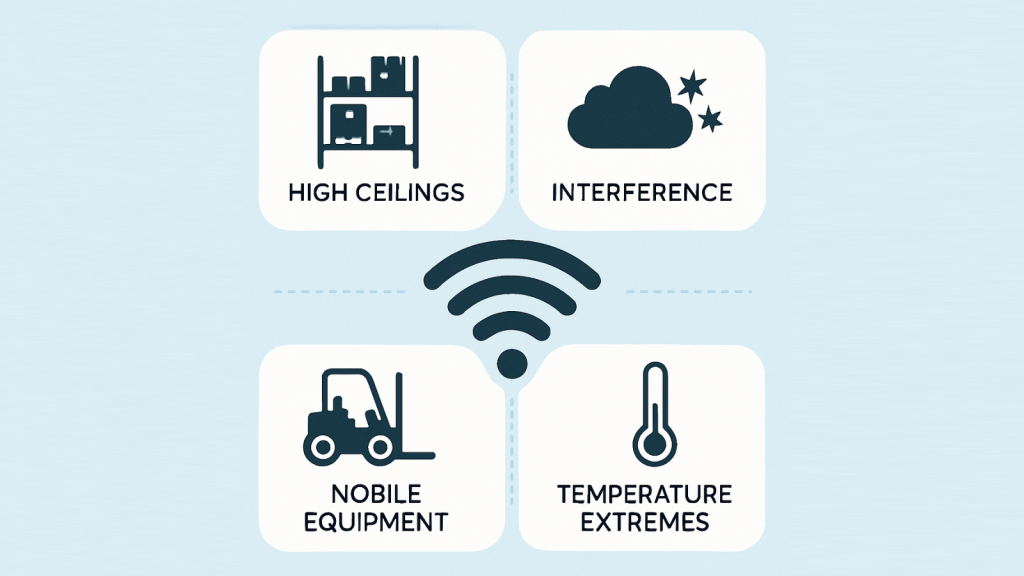
Implementing a Wi-Fi network in a warehouse presents unique challenges. Large open spaces often lead to connectivity issues. Strategic planning can help mitigate these obstacles.
Interference is another common problem. Metal racks and machinery can disrupt signals. Adjustments in placement and technology can help overcome this.
Warehouses also have temperature and humidity extremes. These environmental factors can impact Wi-Fi performance. Ensuring that equipment is suitable for such conditions is essential.
Additionally, dead zones can hinder operations. Conducting a thorough site survey helps identify these areas. Site surveys are key in designing an effective network layout.
Key challenges in deploying warehouse Wi-Fi include:
Interference from metal and machinery
Large spaces causing coverage gaps
Environmental conditions affecting signal strength
Overcoming these challenges requires expertise and planning. Partnering with experienced providers ensures optimal network design and implementation. Tailored solutions can cater to the specific needs of each warehouse, enhancing overall efficiency and connectivity.
Essential Components of Warehouse Wi-Fi solutions
To establish a seamless Wi-Fi network in a warehouse, several key components are necessary. The foundation lies in a robust infrastructure. Proper cabling ensures that data flows smoothly.
Access points are crucial for coverage. These devices should be strategically placed. Their role is to eliminate dead zones and optimise connectivity.
Dual-band routers can manage different traffic types. Utilising both 2.4 GHz and 5 GHz bands helps balance the network. This setup supports various devices like scanners and IoT equipment.
Mesh Wi-Fi systems provide excellent coverage. They are ideal for large spaces, maintaining a consistent signal. The ability to easily expand makes them a flexible choice.
Security cannot be overlooked. Implementing strong encryption and protection protocols is vital. This protects sensitive data from unauthorised access.
Essential components in warehouse Wi-Fi solutions include:
Robust infrastructure and cabling
Strategic access point placement
Dual-band routers for efficient traffic management
Mesh Wi-Fi systems for expansive coverage
Comprehensive security measures
Together, these components create a reliable Wi-Fi network. They ensure seamless operations and data flow within the warehouse. Each element should be tailored to the specific needs of the environment.

Planning & Designing Your Warehouse Wi-Fi Network
Creating an effective Wi-Fi network begins with a detailed plan. A site survey is the first critical step. This identifies areas needing coverage and spots where interference may occur.
Understanding warehouse layout is vital. Metal racks and large equipment can disrupt signals. Careful analysis ensures these obstacles are considered in the design phase.
Deciding on the number of access points is the next step. Placing these at strategic locations ensures full coverage. This approach minimises dead zones and enhances signal strength.
Collaborating with experienced professionals can be beneficial. They bring valuable insights and expertise to the process. Their knowledge helps tailor a network that meets specific needs.
Energy efficiency must also be integrated into planning. Selecting energy-saving devices can reduce costs. Sustainable solutions are not only eco-friendly but also economically smart.
Considerations in planning your warehouse Wi-Fi network include:
Conducting comprehensive site surveys
Analysing warehouse layouts and obstacles
Strategically positioning access points
Seeking expert guidance and advice
Incorporating energy-efficient technologies
The ultimate goal is a network that’s reliable, efficient, and robust. A well-planned network streamlines operations and enhances productivity.

Choosing the Right Wi-Fi technology: Wi-Fi 6, Wi-Fi 6 & Beyond
Selecting the right Wi-Fi technology plays a critical role in warehouse operations. Wi-Fi 5 is currently popular but newer technologies offer better performance. Wi-Fi 6, for instance, provides higher speed and more capacity.
Wi-Fi 6 is designed for high-density environments. It manages many devices with ease, crucial for IoT-heavy warehouses. This results in seamless operations and improved device connectivity.
Looking ahead, newer standards like Wi-Fi 6E and beyond promise further enhancements. They offer wider channels, reducing interference and boosting efficiency. This makes them future-ready for evolving warehouse needs.
Key considerations when choosing Wi-Fi technology include:
Speed and capacity requirements
Number of connected devices
Future-proofing against technological advancements
Choosing advanced Wi-Fi technology elevates operational efficiency. It ensures the infrastructure is robust enough for today and adaptable for future growth. This strategic choice impacts productivity and overall success.
Access Points: Placement, Types & Best Practices
Access points (APs) are vital for establishing a strong warehouse Wi-Fi network. Their placement significantly impacts network coverage and performance. Proper positioning ensures minimal dead zones and comprehensive coverage.
High ceilings and metal shelving can disrupt signals. Thus, strategic AP placement mitigates interference and obstacles. Evaluating these challenges during setup is crucial for optimal network function.
Warehouse APs are available in different types. Indoor, outdoor, and industrial-grade APs each serve unique needs. Selecting the right type is essential for matching warehouse environments and operational demands.
Best practices for AP deployment include:
Conducting a site survey to identify ideal placements
Ensuring line-of-sight for APs where possible
Utilising ceiling mounts for maximising coverage
Consistent maintenance and monitoring are key. This ensures APs function efficiently as the warehouse evolves. Ultimately, effective AP management reduces downtime and enhances operational efficiency.
Overcoming Interference & Environmental Obstacles
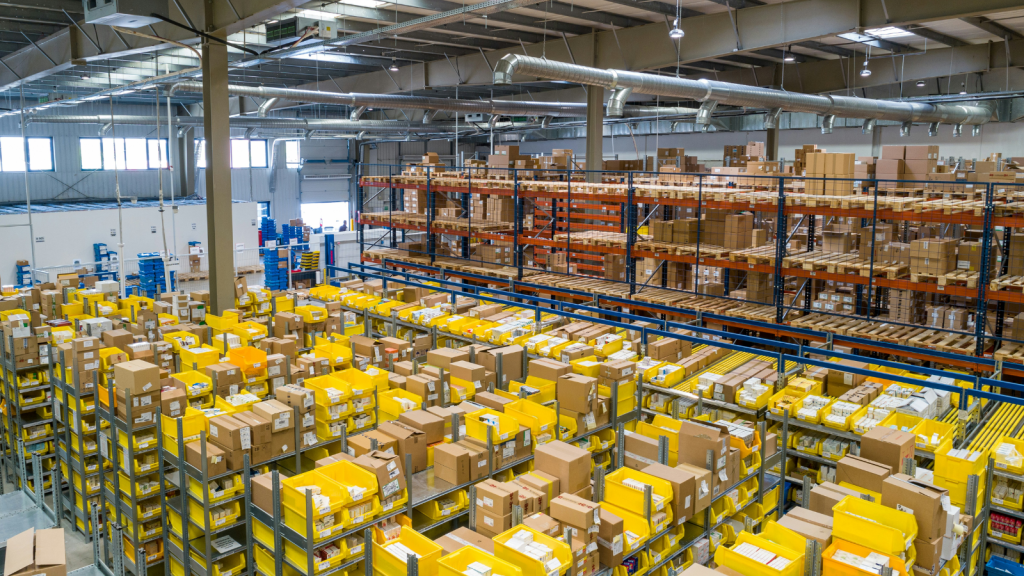
Warehouses often face unique challenges that can affect Wi-Fi performance. Among these are interference and environmental obstacles. Metal racks and large machinery frequently disrupt signals and lead to unstable connections.
Environmental conditions like humidity and temperature fluctuations can further impact signal strength. Therefore, understanding these factors is vital for maintaining consistent connectivity. Regular assessments of environmental conditions help identify potential issues quickly.
To combat these challenges, consider the following strategies:
Implement dual-band Wi-Fi to manage interference
Use directional antennas to focus signals effectively
Deploy mesh systems for larger coverage areas
Strategically placing access points and using appropriate technology can mitigate these obstacles. By addressing interference and environmental factors, warehouses can enjoy seamless connectivity and uninterrupted operations.
Security Considerations for Warehouse Wi-Fi
Security is crucial for warehouse Wi-Fi networks. A breach can lead to data loss and operational disruptions.
Protecting sensitive information and preventing unauthorised access should be top priorities.
Start by implementing strong encryption protocols like WPA3 to secure the network. Regularly updating software and firmware helps close security loopholes. Also, segmenting the network ensures that different areas have restricted access.
Key security measures include:
Employing firewalls and intrusion detection systems
Using strong passwords and changing them periodically
Conducting regular security audits and vulnerability assessments
Educating employees about security best practices is equally important. Employees should be aware of the risks associated with weak passwords and phishing attacks. By focusing on these aspects, warehouses can maintain a secure Wi-Fi network, ensuring both data protection and operational continuity.

Cloud-Managed & Scalable Wi-Fi Solutions
Cloud-managed Wi-Fi solutions offer flexibility and efficiency for modern warehouses. These systems allow remote monitoring and management, enhancing responsiveness to issues. They ensure your network remains robust and reliable.
Scalability is a key advantage of cloud-managed Wi-Fi. As warehouse operations expand, these solutions adapt seamlessly. This flexibility helps meet changing demands without overhauling the entire network.
Consider the following benefits:
Centralised control and management from a single interface
Easy integration with existing IT infrastructure
Enhanced data analytics to optimise performance
Such solutions also often provide real-time data visibility. This supports quick decision-making and improves operational insights. By opting for cloud-managed Wi-Fi, warehouses can maintain peak connectivity, ensuring uninterrupted operations and enhancing overall productivity. Embracing these modern technologies is crucial for sustaining competitive advantage in today’s fast-paced logistics environment.

Integrating Wi-Fi with Warehouse Management Systems (WMS) & IoT
Integrating Wi-Fi with Warehouse Management Systems (WMS) is transformative. It provides real-time data access, enhancing efficiency. This integration streamlines operations and improves decision-making.
The Internet of Things (IoT) plays a pivotal role in modern warehouses. IoT devices thrive on strong Wi-Fi connectivity. They facilitate asset tracking, environmental monitoring, and equipment status updates.
Benefits of integration include:
Enhanced inventory accuracy with real-time updates
Improved asset tracking and location management
Greater efficiency in pick-and-pack operations
This integration supports automation, reducing manual efforts. Wi-Fi powered IoT systems can also predict maintenance needs. This helps prevent equipment downtime, ensuring continuous operations. Overall, Wi-Fi integration with WMS and IoT elevates warehouse performance, leading to enhanced productivity and reduced costs. Embracing these technologies is vital for maintaining competitiveness in the logistics sector.

Maintenance, Monitoring & Future-Proofing Your Network
Maintaining a robust warehouse Wi-Fi network requires continuous effort. Regular checks can prevent connectivity issues. Monitoring tools help spot problems early.
Future-proofing your network is equally important. It ensures your Wi-Fi can adapt to new technologies.
Investing in scalable solutions helps accommodate growth.
Key steps include:
Regularly updating firmware and security protocols
Using analytics for performance insights
Planning upgrades to support emerging technologies
Routine monitoring minimises downtime. It enhances network reliability, ensuring smooth warehouse operations. Future-proofing prepares your business for change, keeping your warehouse at the forefront of innovation. This proactive approach is crucial for maintaining operational efficiency and competitiveness in an evolving market.

Key Takeaways & Next Steps
Upgrading your warehouse Wi-Fi can revolutionise operations. It’s vital to address coverage, security, and integration. These elements lay a solid foundation for digital transformation.
Consider the following key takeaways:
Conduct thorough site surveys to ensure optimal coverage.
Invest in modern Wi-Fi technology like Wi-Fi 6.
Regularly monitor and maintain your network for peak performance.
Integrate Wi-Fi with warehouse management systems for streamlined operations.
The path to enhanced warehouse connectivity includes careful planning and execution. Future-proofing your network ensures it supports evolving technology. Assess your current setup, identify gaps, and define clear goals. Taking these next steps will position your warehouse for increased efficiency and productivity. The journey towards superior warehouse Wi-Fi is essential for staying competitive in today’s market.
Need help with your Wi-Fi? Get in touch!
Please get in touch to discuss your requirements.