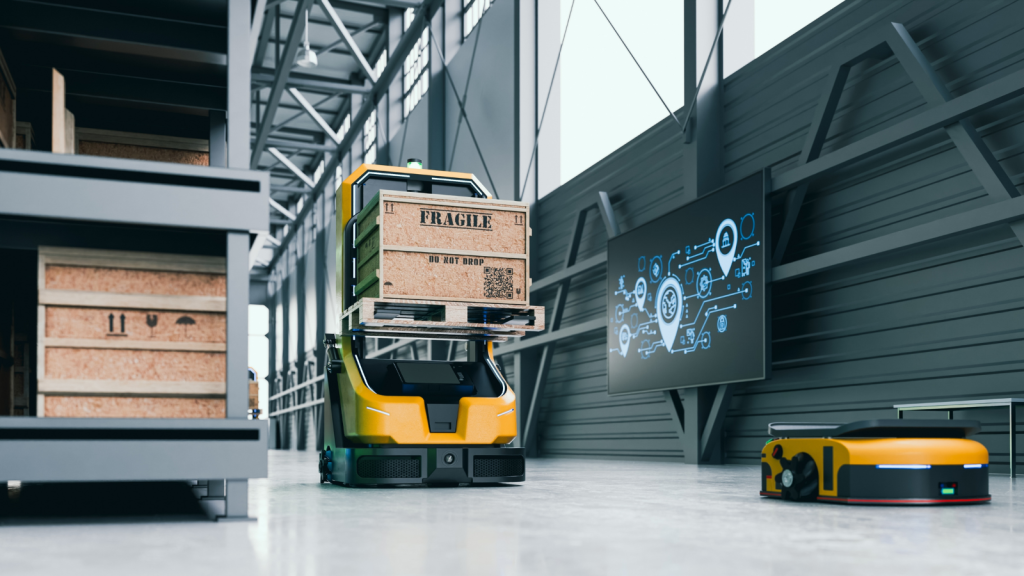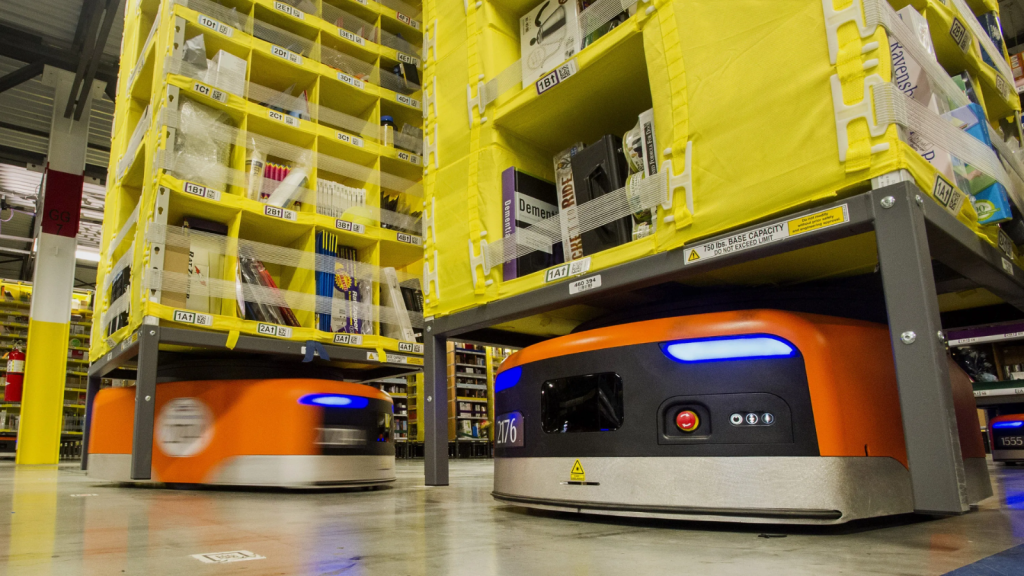
Autonomous Mobile Robots (AMRs) can help warehouses increase productivity, reduce manual transportation and create more flexible operations.
However, deploying robots alone doesn’t guarantee a return on investment.
To demonstrate real business value, warehouse operators need to establish what they want AMRs to achieve, measure performance and ensure the infrastructure supporting automation is ready from the beginning.
So, how can businesses maximise the value of their AMR investment?
Define clear objectives
Before deployment, operators should establish exactly what problem AMRs are expected to solve.
This might include:
🔹 Increasing warehouse throughput
🔹 Reducing manual travel
🔹 Improving labour utilisation
🔹 Shortening order processing times
🔹 Increasing operational capacity
🔹 Improving safety
Clear objectives provide a benchmark against which the success of the deployment can be measured.
Measure the right KPIs
AMR performance should be connected to wider warehouse KPIs rather than simply measuring how many tasks the robots complete.
Depending on the application, useful metrics could include throughput, order cycle time, labour hours per order, distance travelled by employees, AMR utilisation and downtime.
Comparing these figures before and after deployment can provide a clearer picture of the operational impact.
Optimise warehouse processes
AMRs shouldn’t simply be introduced into inefficient existing workflows.
Operators should consider whether picking processes, replenishment, staging areas and material flows can be redesigned around automation.
Small changes to workflows can help AMRs complete tasks more efficiently and allow employees to spend more time on higher-value activities.
Ensure the infrastructure can support AMRs
Reliable infrastructure is critical to AMR performance.
AMRs may depend on wireless connectivity to communicate with management platforms and other warehouse systems as they move throughout the facility.
Warehouses can be challenging wireless environments because of high racking, metal structures, machinery and changing stock levels.
A professional WiFi survey can identify coverage gaps, interference and roaming problems that could affect an AMR deployment.
DTE’s WiFi for AMRs and AGVs solutions help warehouse operators assess and optimise their wireless infrastructure for automation.
Consider scalability
The business case shouldn’t only consider the initial deployment.
A successful AMR project may begin with a small number of robots before expanding across additional workflows, warehouse areas or facilities.
Ensuring systems, processes and the warehouse WiFi network can accommodate future growth can help operators scale automation without repeatedly redesigning their infrastructure.
Review performance continuously
AMR optimisation shouldn’t stop once the robots are operational.
Warehouse layouts, stock profiles, workflows and order volumes continually change.
Regularly reviewing performance data can help operators identify bottlenecks, adjust workflows and ensure their AMR fleet continues delivering the expected business benefits.
Turning AMR investment into business value
Successful AMR deployments are ultimately measured by their impact on warehouse operations.
Clear objectives, appropriate KPIs, optimised workflows and reliable supporting infrastructure can help operators demonstrate measurable improvements in productivity, efficiency and scalability.
For AMRs that depend on wireless connectivity, assessing the network early can also prevent connectivity problems from limiting performance.
Planning an AMR deployment or looking to improve an existing fleet? Speak to DTE about assessing whether your wireless infrastructure is ready to support automation.