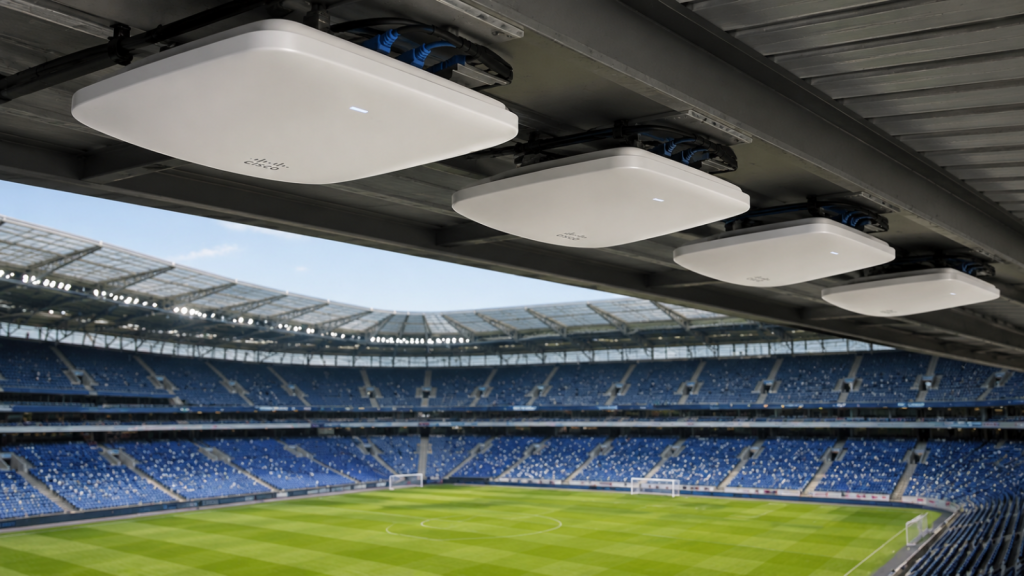
One of the most common questions we hear when planning a stadium wireless network is:
“How many WiFi access points does our stadium need?”
The honest answer is that there isn’t a fixed number.
Every stadium is different, and the number of access points required depends on factors such as capacity, layout, construction materials and how visitors use the network. Simply adding more access points doesn’t always improve performance. In many cases, it can actually make things worse.
Professional Stadium WiFi Solutions focus on balancing coverage, capacity and performance, ensuring spectators, staff and operational systems stay connected when it matters most.
Why there's no standard number
A 5,000-seat stadium has very different wireless requirements to a 50,000-seat venue.
Even two stadiums with the same capacity may require completely different wireless designs depending on:
🔹 Seating layout
🔹 Indoor and outdoor spaces
🔹 Hospitality areas
🔹 Corporate boxes
🔹 Fan zones
🔹 Retail outlets
🔹 Building materials
🔹 Number of connected devices
🔹 Expected network usage
This is why experienced wireless engineers begin every project with a professional survey and detailed design rather than estimating the number of access points.

It's not just about coverage
Many people assume WiFi is simply about ensuring every part of the stadium has a signal.
In reality, capacity is often far more important.
Imagine two scenarios:
Scenario One
A stand has excellent WiFi coverage from just two access points.
When 3,000 supporters try to upload photos, access club apps and browse social media at half-time, those two access points quickly become overloaded.
Although coverage appears good, performance drops significantly.
Scenario Two
The same stand is designed using additional access points, careful channel planning and intelligent radio frequency (RF) design.
Devices are distributed more evenly across the network, reducing congestion and maintaining fast, reliable connections.
Both stadiums have coverage, but only one has been designed for high-density usage.

What determines the number of access points?
Professional stadium WiFi design considers a wide range of factors before deciding how many access points are required.
Stadium Capacity
The number of spectators has the biggest influence on wireless design.
A venue regularly hosting large crowds requires significantly more capacity than one used for occasional events.
Device Density
Visitors rarely carry just one device.
Many spectators connect using:
🔹 Smartphones
🔹 Smartwatches
🔹 Tablets
🔹 Laptops
Staff may also rely on wireless handheld terminals, payment devices and communication systems, all increasing demand on the network.
Venue Layout
Different areas place different demands on WiFi.
These may include:
🔹 Seating bowls
🔹 Hospitality suites
🔹 Executive boxes
🔹 Food and beverage outlets
🔹 Retail stores
🔹 Ticket offices
🔹 Fan zones
🔹 Media facilities
🔹 Back-of-house operations
Each area requires its own approach to wireless design.
Building Construction
Concrete, steel and glass all affect how wireless signals travel.
Professional RF planning ensures access points are positioned to minimise interference and deliver consistent coverage throughout the venue.
Application Usage
How people use the network also affects capacity planning.
Examples include:
🔹 Live streaming
🔹 Social media uploads
🔹 Contactless payments
🔹 Digital ticketing
🔹 CCTV
🔹 Security systems
🔹 IPTV
🔹 Hospitality platforms
🔹 Staff communications
Each application places different demands on the wireless infrastructure.
Why adding more access points can make things worse
One of the biggest misconceptions is that poor WiFi can always be solved by installing additional access points.
Unfortunately, this isn’t always true.
If they’re installed without proper planning, too many access points can create:
🔹 Increased interference
🔹 Channel overlap
🔹 Poor roaming
🔹 Devices connecting to the wrong access point
🔹 Reduced network performance
Professional wireless design focuses on placing the right number of access points in the right locations, rather than simply installing more hardware.
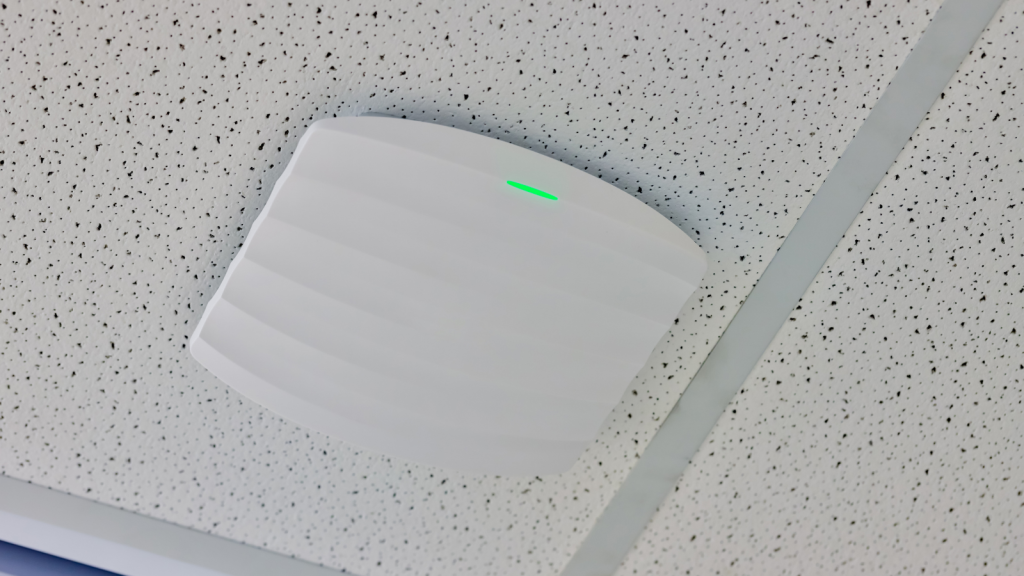
How we determine the right number
At DTE, every stadium project begins with understanding how the venue operates.
Our engineers assess:
🔹 Expected attendance
🔹 Existing infrastructure
🔹 Building layout
🔹 Wireless usage
🔹 Capacity requirements
🔹 Future growth plans
Using Ekahau AI Pro and Sidekick 2, we model wireless performance before installation begins, helping ensure the final network delivers reliable connectivity across the entire venue.
This approach reduces risk, improves performance and avoids unnecessary hardware costs.

Professional stadium WiFi design delivers better performance
A well-designed wireless network provides more than strong signal coverage.
It delivers reliable connectivity for:
🔹 Spectators
🔹 Ticket scanning
🔹 Hospitality services
🔹 Contactless payments
🔹 Retail operations
🔹 Security teams
🔹 Staff communications
🔹 Media and broadcast systems
By carefully balancing coverage and capacity, venues can provide a better experience for visitors while supporting the systems that keep events running smoothly.
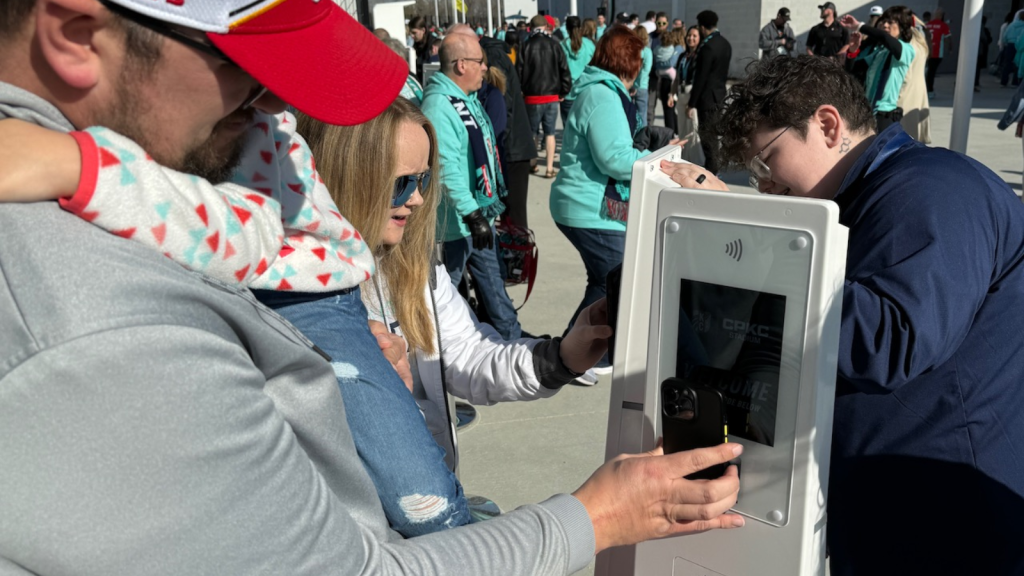
Planning a stadium WiFi upgrade?
If you’re planning a new wireless deployment or upgrading an existing network, understanding how many access points you need is just one part of the process.
A professional wireless survey and network design ensure your infrastructure is built around your venue, visitor numbers and operational requirements rather than guesswork.
Explore our Stadium WiFi Solutions to learn how DTE designs, installs and optimises enterprise wireless networks for sports venues, arenas and event spaces.
Speak to a Specialist
Provide your details below, email [email protected] or call +44 (0) 845 658 8810.