


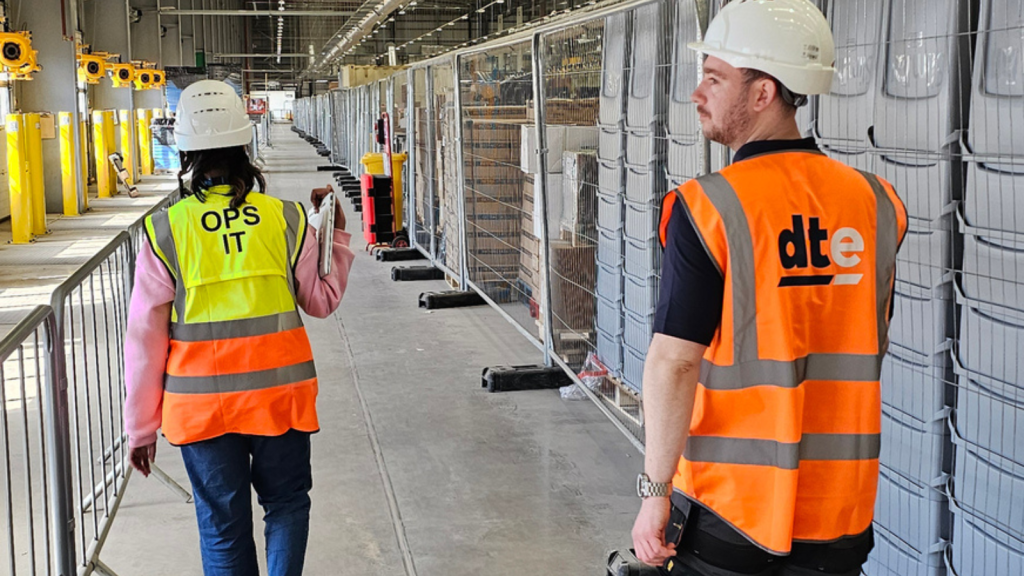

A warehouse electrical fit-out needs to support far more than lighting and power sockets.
Modern warehouses rely on machinery, automation, charging infrastructure, data networks, Wi-Fi and other connected systems. Getting the electrical infrastructure right from the outset can reduce costly changes and help ensure the facility is ready for future growth.
Here are some of the key areas to consider when planning a warehouse electrical fit-out.
Start by identifying what will require power across the warehouse.
This could include:
🔹 Conveyors and machinery
🔹 Packing equipment
🔹 Automated systems
🔹 Forklift charging
🔹 IT and network equipment
🔹 Office and welfare areas
🔹 Loading bays
🔹 Lighting
It’s also important to consider future requirements. Installing sufficient capacity during the initial fit-out can be more cost-effective than upgrading the electrical infrastructure when new equipment is introduced.
Many warehouses require three-phase power for higher-demand equipment such as conveyors, compressors, machinery and automated systems.
The location of this equipment should be considered during the electrical design so supplies, circuits and distribution can be positioned appropriately.
If future automation or machinery is planned, allowing for additional capacity can also make expansion easier.
If the warehouse uses, or plans to introduce, automation, this should form part of the initial electrical design.
Conveyors, sortation systems, robotics, AMRs and AGVs can require additional:
🔹 Power supplies
🔹 Dedicated circuits
🔹 Charging infrastructure
🔹 Data cabling
🔹 Network connectivity
🔹 Wireless infrastructure
Planning these requirements early can help avoid retrofitting electrical and network infrastructure after automation equipment has already been installed.
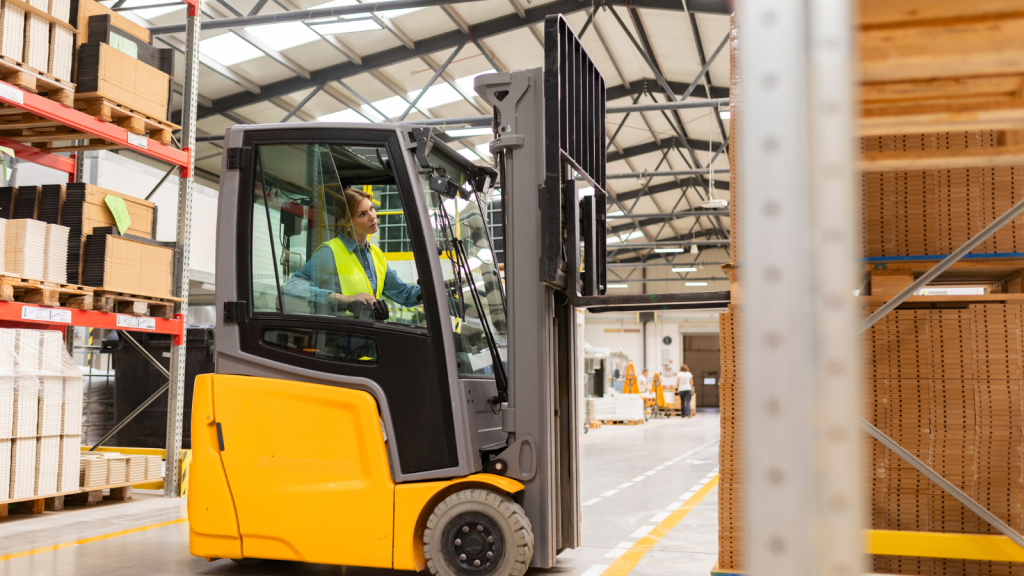
Electric forklifts, pallet trucks and other warehouse vehicles can place significant demand on the electrical infrastructure.
Your EV charging fit-out should consider how many charging points are required, where they will be positioned and whether the electrical supply has sufficient capacity.
If your fleet is likely to become increasingly electrified, designing for future charging requirements can help avoid another major electrical upgrade later.
Power and connectivity are increasingly interconnected within modern warehouses.
Barcode scanners, Warehouse Management Systems (WMS), IoT devices, machinery and automation all rely on network connectivity.
Your warehouse fit-out may therefore also need:
🔹 CAT6 data cabling
🔹 Fibre optic cabling
🔹 Network cabinets and racks
🔹 Cabling for wireless access points
🔹 Communications rooms
Planning electrical, data and Wi-Fi infrastructure together can help ensure all systems are ready when the warehouse becomes operational.
Warehouses often present installation challenges that aren’t found in conventional commercial buildings.
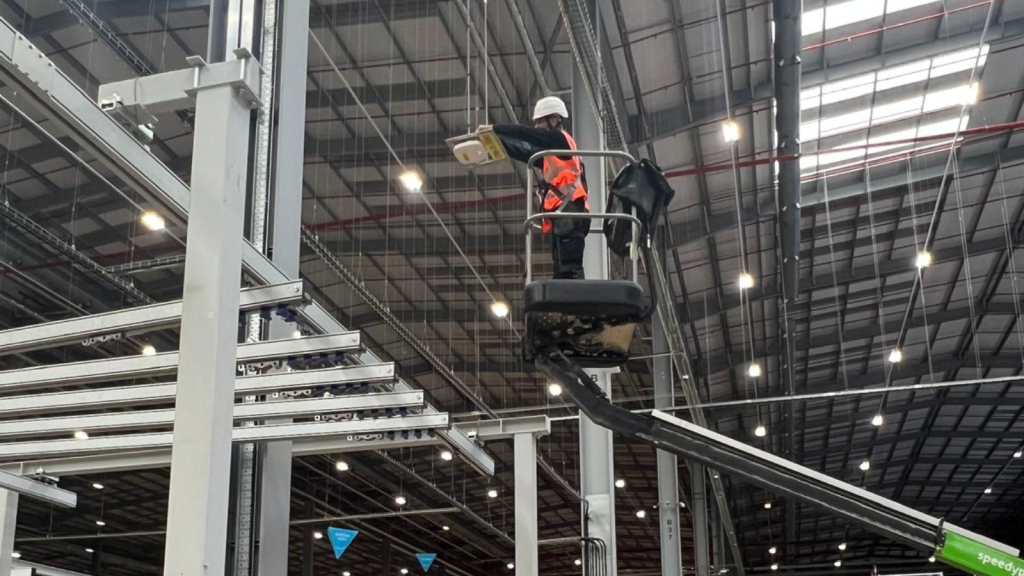
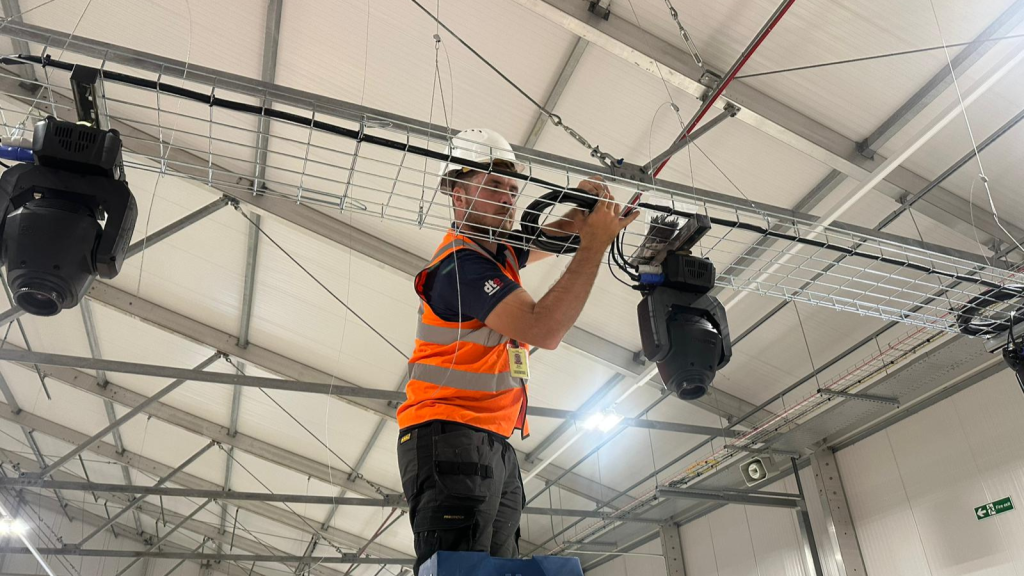
High ceilings, racking and restricted access can require specialist access equipment for electrical cabling, lighting and other infrastructure.
These requirements should be identified during the planning stage so they can be factored into the project schedule and cost.
Not every electrical fit-out takes place in an empty building.
If you’re refurbishing or expanding an operational warehouse, work may need to be carefully coordinated around shifts, picking operations, machinery and vehicle movements.
This could involve:
🔹 Phased installations
🔹 Planned electrical shutdowns
🔹 Out-of-hours working
🔹 Restricted working areas
🔹 Coordination with other contractors
Planning these requirements in advance can help minimise downtime and disruption.
One of the most important considerations is how the warehouse may change.
You may currently require only basic lighting, power and data infrastructure, but future plans could involve additional machinery, automation, AMRs, electric vehicles or expanded warehouse capacity.
Building flexibility and spare capacity into the electrical design can make future upgrades easier and potentially reduce long-term costs.


Provide your details below, email [email protected] or call +44 (0) 845 658 8810.
Provide your details below and we’ll be in touch.
Wireless Network Design & BIM
We are specialists in Wi-Fi network design, with more than half a billion square feet of successful deployments across operational warehouses and logistics facilities worldwide.
Our highly trained engineers use industry-leading tools such as Ekahau and Navisworks to model environments in both 2D and 3D, allowing us to deliver guaranteed, fit-for-purpose coverage.
Provide your email so we can send you the e-brochure.