
The 2026 FIFA World Cup attracted millions of supporters from around the globe, but it also created opportunities for cybercriminals.
Throughout the tournament, cybersecurity experts warned fans about fake public WiFi networks designed to imitate legitimate stadium, hotel and fan zone connections. Many supporters unknowingly connected to rogue wireless networks that could have exposed usernames, passwords, banking information and other sensitive data.
While the tournament has now ended, the lessons remain highly relevant for any organisation that provides guest WiFi.
Whether operating a stadium, hotel, retail store, airport or visitor attraction, businesses should ensure customers can connect safely and confidently to legitimate wireless networks.
Why fake public WiFi was such a concern
Creating a fake wireless network requires very little equipment or technical expertise.
Cybercriminals can simply broadcast a convincing network name, such as:
🔹 Stadium Guest Wi-Fi
🔹 Fan Zone WiFi
🔹 Hotel Guest Internet
🔹 Free Public Wi-Fi
Many visitors naturally assume these networks are genuine, particularly in busy venues where they expect free internet access.
Once connected, attackers may be able to:
🔹 Capture usernames and passwords
🔹 Redirect users to fake login pages
🔹 Intercept unencrypted traffic
🔹 Steal payment information
🔹 Install malicious software
Research published around the tournament found that many users would trust a public WiFi network simply because it appeared to belong to a well-known venue or event.

Why major events create ideal conditions
Large sporting events naturally encourage people to connect to public wireless networks.
Visitors often need internet access to:
🔹 Access digital tickets
🔹 Order food and drinks
🔹 Check travel information
🔹 Use online banking
🔹 Share photos on social media
🔹 Navigate unfamiliar locations
With mobile networks frequently becoming congested during large events, free public WiFi becomes even more attractive, making it an ideal target for cybercriminals.

Could most people identify a fake network?
In reality, probably not.
Fake Wi-Fi networks can appear almost identical to legitimate ones.
This is why cybersecurity experts continue to recommend that users:
🔹 Confirm the official network name with staff
🔹 Avoid connecting to unknown or duplicate network names
🔹 Enable multi-factor authentication
🔹 Use a VPN where appropriate
🔹 Avoid accessing sensitive accounts on unfamiliar public WiFi
However, protecting users shouldn’t rely solely on individual awareness.
Businesses also have an important role to play.
Why secure guest WiFi matters
For many organisations, guest Wi-Fi has become an expected service rather than a luxury.
Customers expect:
🔹 Safe internet access
🔹 Reliable connectivity
🔹 Clear branding
🔹 Fast login
🔹 Confidence they are joining the correct network
Professionally designed guest WiFi helps create a trusted user experience while reducing confusion between legitimate and fraudulent wireless networks.

How captive portals improve trust
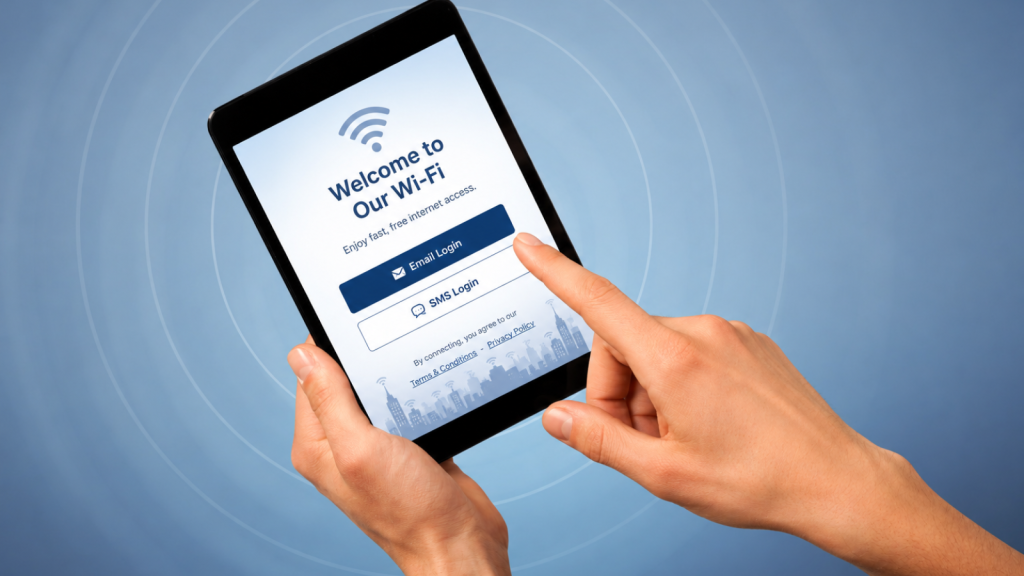
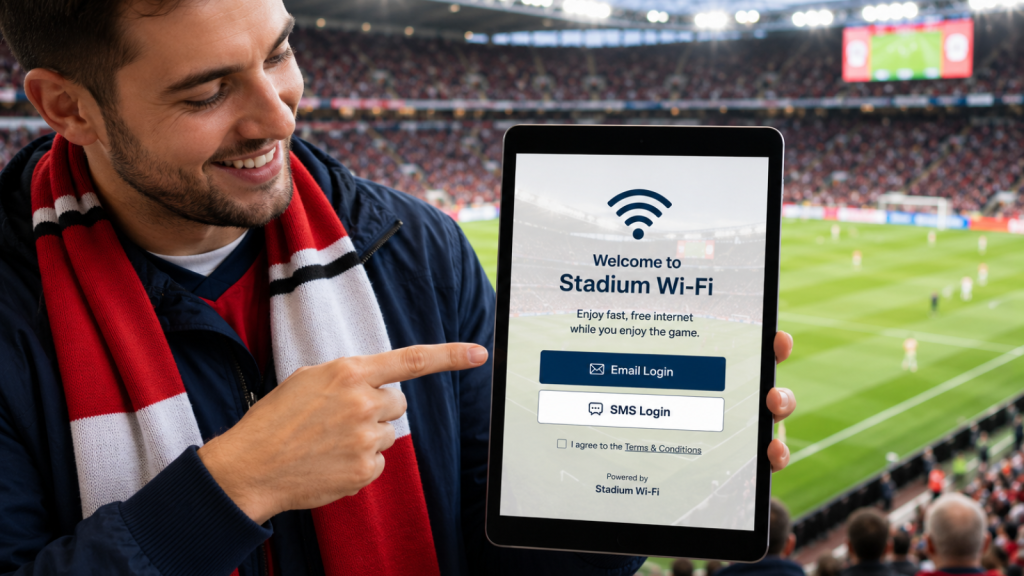
One of the simplest ways organisations can reassure visitors is through a professionally branded captive portal.
Rather than immediately connecting to the internet, users first see a branded login page displaying:
🔹 Company branding
🔹 Venue information
🔹 Login options
🔹 Terms of use
🔹 Privacy information
This gives visitors confidence they have connected to the genuine wireless network.
Modern captive portals can also:
🔹 Authenticate users
🔹 Separate guest traffic from corporate systems
🔹 Improve compliance
🔹 Record acceptance of terms
🔹 Reduce network misuse
For organisations welcoming large numbers of visitors, captive WiFi portals provide both security and a more professional customer experience.
The lasting lessons from the world cup
Although the tournament has finished, the cybersecurity risks associated with public WiFi have not disappeared.
Hotels, retail stores, stadiums, airports, universities and other public venues continue to attract visitors looking for free internet access every day.
Providing secure, professionally managed guest WiFi is no longer just about convenience. It helps build customer trust, protects users from fraudulent wireless networks and demonstrates that an organisation takes cybersecurity seriously.
Looking to improve your stadium WiFi?
The 2026 FIFA World Cup served as a timely reminder that public Wi-Fi can become a target for cybercriminals when security is overlooked.
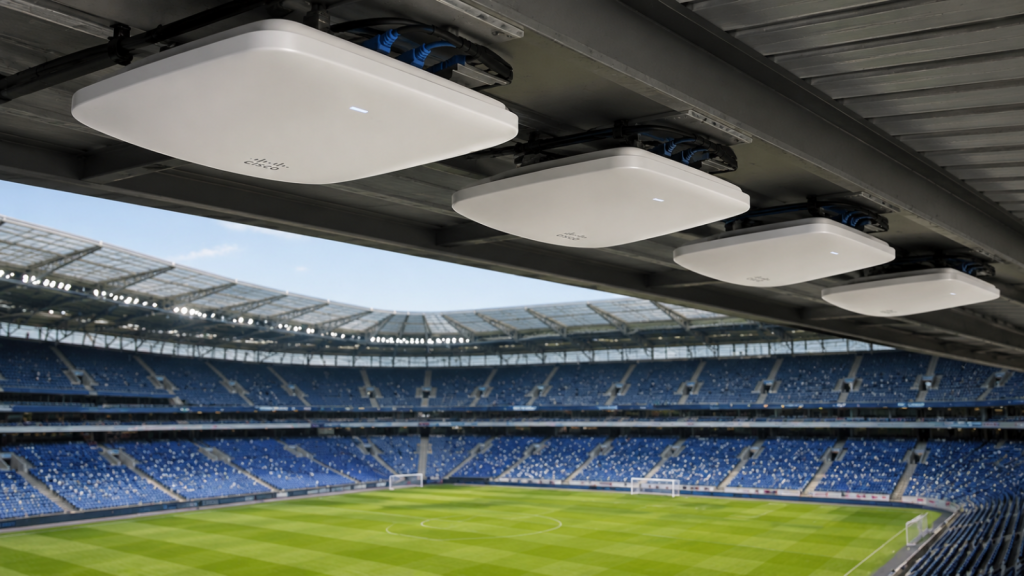
While individuals should remain cautious when joining unfamiliar wireless networks, businesses can also reduce risk by investing in secure guest WiFi, professionally branded captive portals and well-designed wireless infrastructure.
For organisations that provide public internet access, creating a safe and trustworthy wireless experience benefits both customers and the business itself.
Speak to a Specialist
Provide your details below, email [email protected] or call +44 (0) 845 658 8810.